
If anyone had told me four years ago that in 2024 I would be the “driver” of one of the most established writing centers in the country, I wouldn’t have believed it! At that time, 2020, the horizon was somewhat dark: the pandemic had sent us home for an indefinite period of time; I was facing the arduous process of writing my master’s thesis, and I felt prepared to shift to a new job.
Still, it wasn’t all darkness! There were flashes of light at the end of the tunnel: a brighter path. One of them was precisely to start collaborating virtually, at the end of 2020, in Centro de Escritura y Argumentación (CEA) of UAM Cuajimalpa, the first writing center in a public university in Mexico. At CEA, founded in 2014 by Gilmar Ayala Meneses, I was able to reconnect with teaching and tutorial work, and I was able to reaffirm my interest in Writing Across the Curriculum. When, at the beginning of 2022, Gilmar invited me to take the administration, I did not hesitate to say yes!
The metaphor of the moving train is ideal to explain what makes this center unique, because, since I took the wheel, I realized that it was essential to recognize and tune in to what has kept the center moving in these 10 years of existence: the conviction to promote teaching, tutoring and assessment.
Component #1: Teaching
Teaching is one of the main components of the center’s motor. Since 2014, the center has offered optional courses and workshops in the university for students who want to strengthen their composition abilities. Although in many writing centers this is not so common, this extracurricular offering has been possible in the context of UAM Cuajimalpa because the first year composition courses are coordinated by each of the 11 academic programs which makes them very different from one another. Instead the courses and workshops offered from CEA seek to promote a consistent vision of written language from a coherent writing pedagogy.
At CEA, we conceive the classroom as a powerful space to spark learning in which it is possible to question the traditional teaching approach and to recognize the possibilities of composition classes when they are presented from a constructivist point of view. Therefore, one of our purposes is to continue promoting these courses and workshops alongside the continuous reflection on teaching, writing pedagogy and written language.

Component #2: Tutoring Tutoring is another of the moving forces of our center because in the reflections we have made about traditional teaching, we have realized that writing with others is essential for students to conceive themselves as potential writers. Spanish written language tutoring (the first language of most students) is offered to undergraduate and graduate students, and to the staff of the university. For students, tutoring is provided by writing peers; for the rest, by writing teachers.
Even though, since the beginning of the CEA, tutoring has been offered as a complementary service to our courses and workshops, we also look for ways to make alliances with curricular and disciplinary teachers so they promote the center´s tutoring to their students.
We are interested in one on one interactions because they are different to the dynamics of the classroom. In tutoring we help students use personalized strategies to take control of their composition processes.
Component #3: Assessment
Finally, interest in assessment has always mobilized CEA. This has been possible because we have a written language standardized test that we have applied consistently since 2014. On one hand, systematically evaluating students has allowed us to be accountable to the institution and to justify the need for our courses, workshops and tutoring. On the other hand, it has allowed us to give students a diagnosis of their abilities at the beginning and throughout their academic career with which they can make decisions about how they participate and benefit from the center’s services.

However, it is important to recognize that, over time, we have realized that standardized assessment has limitations and, therefore, we are currently working on a more comprehensive assessment proposal. That is, instead of saying forever goodbye to assessment from the center, we seek to formulate a proposal that is aligned with the learning outcomes of the courses and workshops we offer, that integrates formative and summative evaluation and feedback, and that allows the diversification of assessment tools and writing prompts.
Finally, as I mentioned, understanding and tuning into these components has been very important in the process of getting on this moving train. However, it didn’t happen overnight. When I first took office, my energies were focused on understanding this very complex machinery, trying, above all, one not to fall, and two, not to crash it irreparably. In the second year, although I already felt that I could administrate the center better, I also began to realize that some elements needed to be questioned and changed. I now realize that, for the train to continue running, it is necessary to do much more than just maintaining it: it must be renewed.
Likewise, it has also been necessary to review the paths taken and those yet to be followed, and, of course, to understand the whole Writing Across the Curriculum landscape in the country. The truth is that in many universities in Mexico, including UAM Cuajimalpa, there is not always a clear distinction between writing centers and writing programs. And if one or the other exist they are usually the only existing WAC initiatives in the institutions. Therefore are the main responsible for transforming the way writing is learned. Fortunately, the CEA is not alone in this great challenge. More and more writing programs and writing centers are emerging in different institutions to contribute to discussions about the way writing is learned and taught in university communities, about the different WAC initiatives needed to this end, and about the scope and possibilities of writing centers.

About the Author
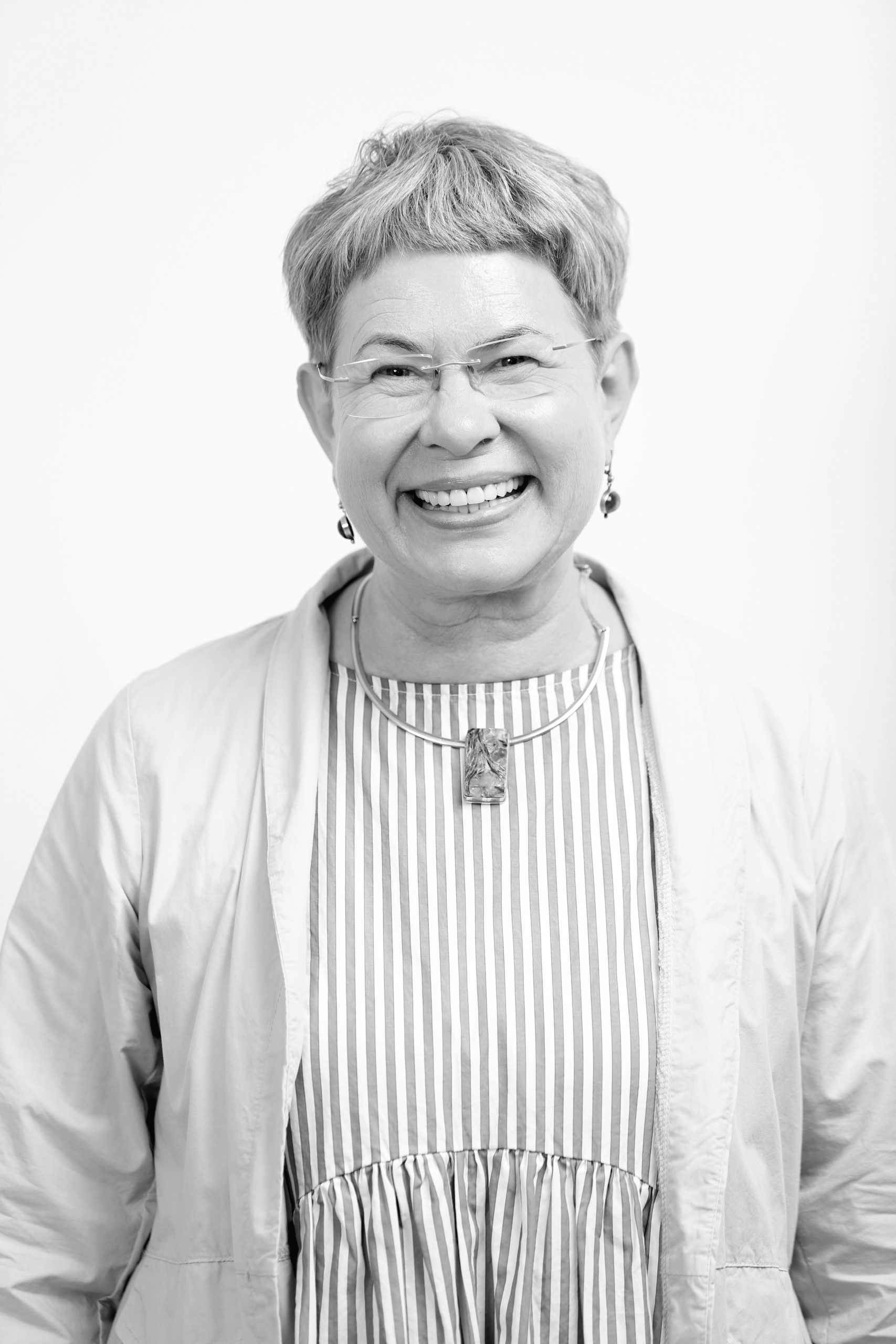
Carla Rivera Pastrana is a graduate in Latin American Literature at Universidad Iberoamericana (2010-2015). Subsequently, he completed a master’s degree in Educational Research and Development (MIDE) (2018-2020) at the same institution, where she developed a project on the writing assessment in first year courses in Higher Education in Mexico. Currently, she works as head of the Centro de Escritura y Argumentación at UAM Cuajimalpa.
Email: criverap@cua.uam.mx




Excelente!!! Muchísimas felicidades!!! Este artículo me permitió conocer la importancia de los Centro de Escritura en la formación integral de los estudiantes, lo cual se traducirá en mejores personas para enfrentar los desafíos de nuestros tiempos!!!