
Editor’s note: Recently I joined the South African Writing Centre’s group—and quickly realized I knew very little about the work being done by writing centers in their part of the world, or the challenges they face. Thankfully, Dr. Rose Richards and Sharifa Daniels were happy to share about both the SA WC group and the work they do together at Stellenbosch University.
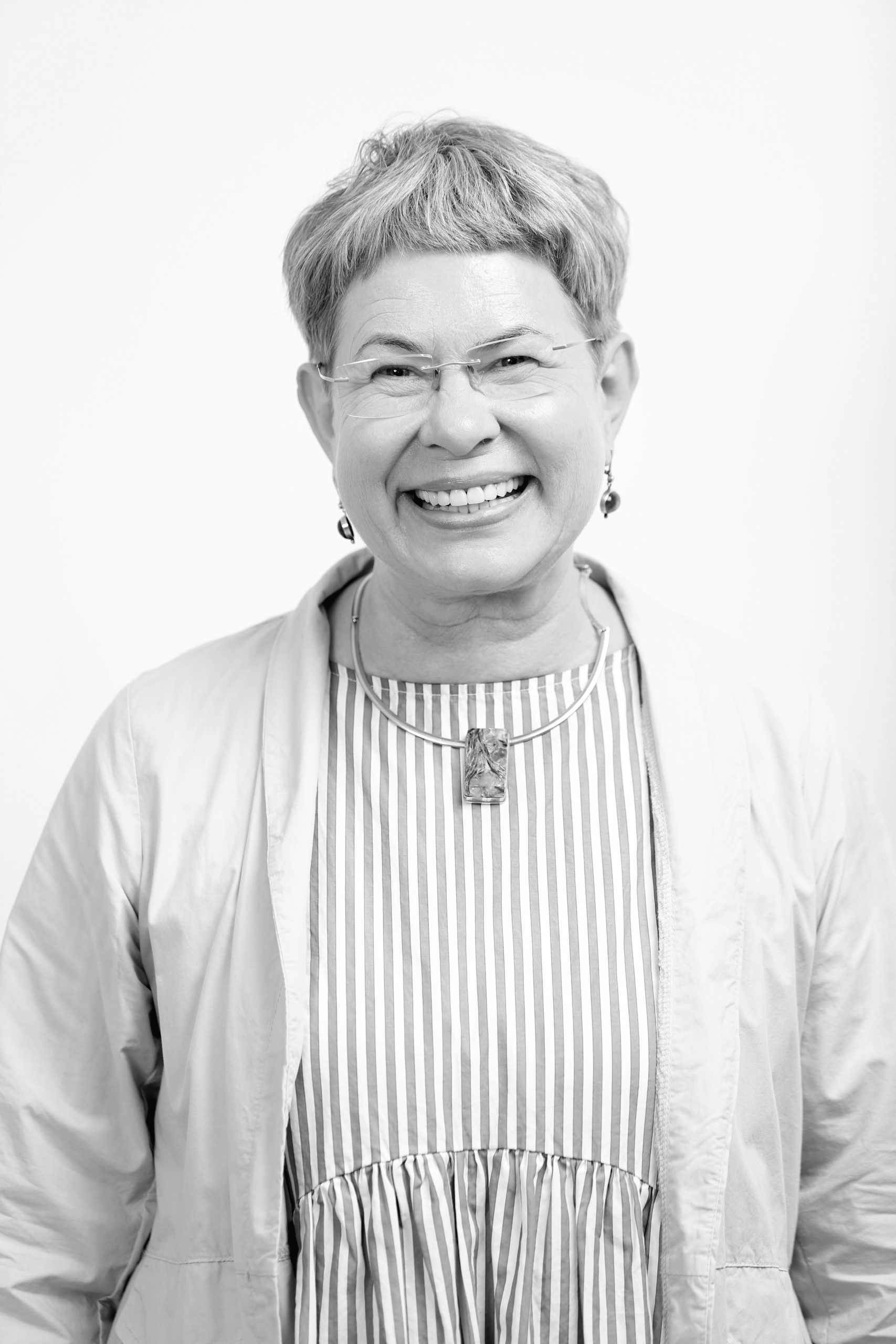
 DR. ROSE RICHARDS
The SA WC group is an informal body. It’s been around since the early 2000s. We’ve never formally constituted, preferring our independence. Also time and money are considerations with these types of things, as these types of formal groups need to be maintained. Some years ago we formed the first Special Interest Group at the Heltasa (Higher Education in Learning and Teaching Association of South Africa) national conference. Since then SIGs have become part of the conference and several SIGs now exist; we’re working on formalising our community a bit more this year.
We haven’t really had leaders as such, being more of a collective. We have SIG convenors. I was one, Sherran Clarence and Jacques du Toit have also been convenors. I ran out of funds around the time I was busy with my PhD and haven’t been to Heltasa in a while.
 We have a listserv and a directory for the SA WC community. Just about every tertiary institution these days has a writing centre (in some cases more than one). I think we have at least 13 WCs in the country. We are not a big country: only about 56 million people and relatively few of us get to university. University study is very expensive here. There are bursaries and scholarships, but not nearly enough and those that exist are for the most part not very large. Because of SA’s history many parts of the population have been educationally disadvantaged for decades and this has an effect on the current generation. It’s hard to escape a cycle of poverty for instance when you come from an under-resourced and under-educated background.
I started the Stellenbosch Writing Lab with Sharifa in 2001. I was tutoring in the English Department at Stellenbosch and working in a bookshop. I had planned to be a freelance writer, but was struggling to make ends meet. A senior colleague saw the advert for the writing lab post and urged me to apply. The post was being advertised by a lecturer in the department of Afrikaans and Dutch. He had started his own organisation for language and communication and had researched writing centres in the states. His aim was to start a bilingual one here, hence two heads. I am the English Head and Sharifa is the Afrikaans Head.
 The rest, they say, is history!
One last note: I would urge writing centre people to document and research their practise. One of my greatest regrets is not focusing enough on that. I have found our role tends to be behind scenes and often therefore not valued as much as it could be. Good research into what one is doing may go part of the way to overcome this problem.
 SHARIFA DANIELS
Yes, we are indeed very proud of our multilingual writing centre and what we have achieved thus far (and about our role in the South African writing centre movement/community). Writing centres in South Africa have played an important role in helping to make students’ transition to tertiary education easier and more successful. Our writing centres have been described as transformational spaces; rehearsal spaces; liminal spaces; contact zones; etc.
In South Africa, the issue of language is highly contested, and is also tied to issues such as access and success. Historically our university, Stellenbosch, was a white Afrikaans university even though the languages of teaching and learning were always Afrikaans as well as English. These two languages are still the languages of teaching and learning at the University. This means that students can do their studies through either of these two languages where possible. In addition, South Africa has eleven official languages but Afrikaans and English are the only ones that have been developed as academic/scientific languages for tertiary study. (Currently, there are a few universities involved in developing indigenous African languages as scientific languages but these things take many years.)
 In our Writing Lab we consult in both languages – Afrikaans and English. Therefore, we have consultants who can consult in either English or Afrikaans, or in both languages. We encourage a flexible approach to language use in the consultations and consultants often code switch when the writer prefers to do so. Rose and I work together in an integrated manner because the two languages also mostly function in an integrated manner (and not in isolation).
As you can see there are so many things that make SA writing centres, including our Writing Lab, melting pots of multilingualism and multiculturalism.
Have a question for Rose or Sharifa? Comment below!


I’ve recently found Bowker’s article about the two “archives”, that highlights another aspect of documenting one’s work and also maybe what one might document (or choose not to document). If we are aiming at being a different type of space for writers at university, where hierarchies are renegotiated to an extent, the choice of what to document become political too. Who is heard and who is not? Who is remembered?
Geoffrey C. Bowker (2010) The Archive, Communication and Critical/Cultural
Studies, 7:2, 212-214, DOI: 10.1080/14791421003775733