
Ryan, one of my fellow undergraduate writing coaches in training at the Virginia Tech Writing Center, had a first-year client—“Erick”—who struggled to define “supernatural” for a definition based paper. Erick could not understand what the assignment for a foundational English course was asking for. After listening to Erick’s troubles, Ryan sympathized, but soon asked him, “Well, what does supernatural mean to you?” Erick proceeded to tell him what supernatural meant. “Just write that for your thesis!” Ryan exclaimed. Erick was still confused; what Ryan suggested couldn’t possibly be what the assignment, and the professor, was asking for.
Another one of my peers, Alexis, had another first-year client—”Emma”— who was looking for help on a critical analysis paper. The professor had instructed her students to use Aristotle’s rhetorical appeals as lenses for analysis. After Alexis reviewed what Logos, Ethos, and Pathos were, Alexis and Emma combed through Emma’s draft to find the appeals. Emma kept asking, “So is this Ethos? Does this qualify as Pathos? Do you think this is what the professor is looking for?”
In our class for tutors in training, we discussed these sessions, and why it is often difficult for first-year students to have confidence in their own ideas. We agreed our experiences in high school often taught us to doubt our own ideas, and to rely on sources like SparkNotes and Shmoop. For example, in high-school, when I deduced my own answers to prompts using strategies taught in English class, I was quickly beaten-down: my interpretations were “wrong,” my support was “weak.” I did not get good grades. It was much more effective for me to find the accepted interpretations online, and work backwards in a convergent process: given the “right” answer, I found evidence from the text that fit in each rhetorical appeal and spewed reasoning connecting the evidence to the answer; I began to get good grades.
Self-trust is beaten, not built in secondary education schools. The acquisition of our “critical thinking and analysis” skills was driven by SAT and AP curricula; secondary education teaches us how to support an accepted idea, not how to arrive at one.
An undergraduate student attending Kutztown University in Pennsylvania noticed this pattern as well. In “The Enemy of Writing: Standardized Testing,” Catelynn Pasterchick notes the “disconnect between secondary curriculum and post-secondary writing expectations” (Pasterchick, 2021). She argues that when “the US Department of Education leans on drilling test material to meet nationwide requirements, high school students graduate with a limited perception of writing” (Pasterchick, 2021). Standardized tests create questions and answers with no room for interpretation; students are discouraged from sharing their unique perspectives and making meaningful, personal contributions to collective academia knowledge. High school English classes, often the only exposure students have to writing, may imply that students’ individual thoughts are not acceptable contributions to academia.
My own experience in American secondary education created a “standard writer” who came to college understanding that academic writing is confined by Aristotle’s appeals, proper citation, “accepted” interpretations of texts, and rubric-based judgment.
As a result of standardization, most students understand writing is meant primarily for assignments and assessment. We don’t think critically in “critical analysis;” we produce checks for the rubric’s boxes and placate teachers’ expectations. Erick didn’t believe his professor didn’t have a specific definition of the supernatural; Emma was hunting for the correct checks for the Ethos, Logos, Pathos boxes; and I learned to ignore my own connections in favor of the cannon’s interpretation.
It’s a shock when there is the permission, and expectation, to think.
How can a writing center and its tutors help decondition “standard writers?”
For myself, “deconditioning” was unintentional: I simply indulged in my love for story-telling. I wrote for myself, outside of school assignments, where I could play and find my own voice on my own time without assessment. I have the good luck of being mesmerized by the power and craft of writing, and of having the passion to share it, but others may not have this passion. Still, writing centers can intentionally decondition standard writers by inspiring confidence.
Transitioning from high school to college highlights the disconnect between learned secondary education skills and post-secondary expectations produces anxiety, ruffles insecurity surrounding individual opinions and acceptance, and shames students for their apparent inability to write. As a result, students often swear off writing and any subjects requiring it. Others come in desperation to the writing center, looking for guidance.
In the case of guiding undergraduate writers, Patrick Greene and Mears Pollard, two coaches in the VT Writing Center often start by asking students about their personal reaction and the emotions they felt reading the text. They remind students to pay attention to their own thoughts and ideas, and write them down. They coax students to talk about their passions, their point of views, their experiences, and affirm them. Sometimes, simply asking students what they are trying to say unlocks perceived restrictions. Sometimes, students just need someone to talk to. Spoken words become the base for written synthesis.
Our role as writing coaches should include encouraging students to speak about their ideas, and prompting further. I like to ask: “Well, what were you reminded of that made you think that? What do you know that the reader may not? What makes this idea yours?” `
This guidance declares freedom of personal expression. It is the permission to think, which is the first step in building the confidence to write.
Have you encountered standardized-testing reared writers? How do you help them in the short and long terms? Do you think post-secondary education Writing Centers can start change in the fossilized secondary education system?
Work Cited
Pasterchick, C. (2021). The enemy of writing: Standardized testing. English Department: Research for Change – Wicked Problems in Our World. 66. https://research.library.kutztown.edu/wickedproblems/66
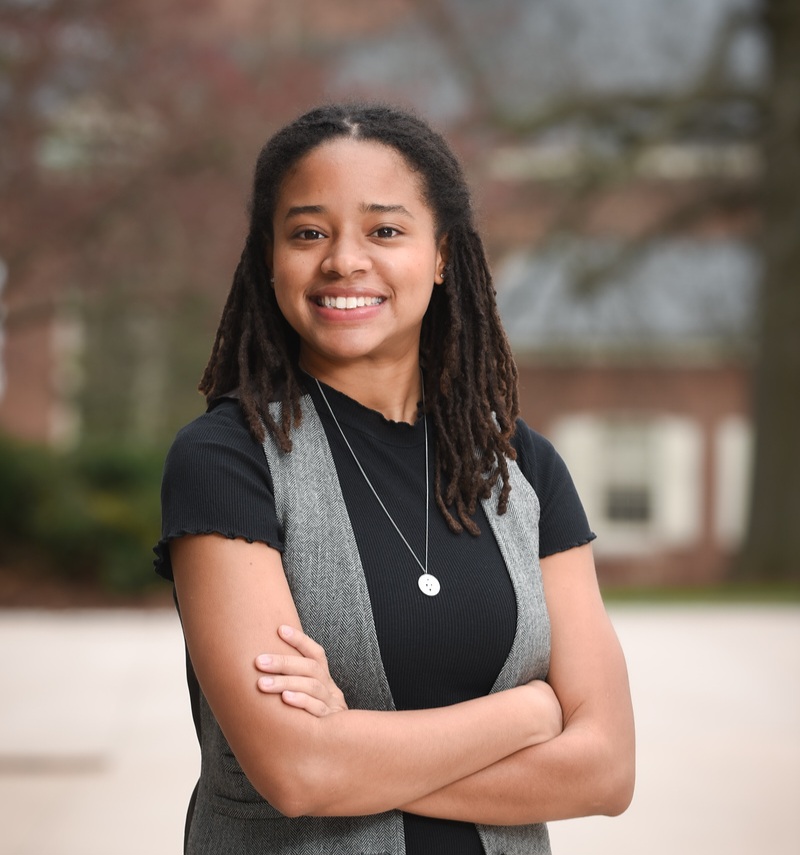
 About the author: Katerina Chebotaryova is a writing coach at the Virginia Tech Writing Center. She is a first generation American working towards her B.S. in Aerospace Engineering and a minor in Leadership and Service. In her free time, she enjoys sparring, drawing and painting nature, and showering her own–and any–cats with love.






Leave a Reply