
I attended Title I schools for elementary and high school. My high school in particular had a reputation that caused many parents to move their families to different school zones, and to this day meets me with sympathetic and almost pitiful ohhs every time someone asks me what high school I went to. For all of middle school, however, I attended an affluent school. The differences were very apparent, even to the wide-eyed eleven-year-old I was. The most obvious difference was the demographics. I went from the diversity-rich classes of my elementary school to a place where suddenly the population of students who spoke another language at home, like me, became the minority.
This was why returning to my home high school and hearing multiple languages while walking down the hallway was like music to my ears. I came into my own within my first couple of months of being an Atom (our school’s mascot). My freshman world history teacher, Dr. Kelly, paid genuine attention to every one of his students. Our first exam involved writing a timed essay. When I was handed back my essay a week or two later, stapled to it was a recommendation attached to an application to be a tutor in our school’s writing center. Written on the recommendation in Dr. Kelly’s handwriting was a note encouraging me to apply, saying he thought I would be a great fit for the role. Flying under the radar had gone out the window, and I was okay with that. I applied, thinking I would not be accepted because I was a freshman.
A month later I was shocked to find myself sitting at the new tutor training. Soon after, I was having my first tutoring session. I can clearly remember working with a sophomore on a Shakespeare essay on a play I had never read before. I was intimidated, so I began to joke around with him. The moment he laughed with me the tension in the air was cleared. My first couple of sessions went like this: a straightforward assignment, a tutee who was simply having trouble starting or finding their footing, and working together on chipping away at it. I loved every minute. I looked forward to meeting and working with new people. I was thrilled when someone would come back a second time to work with me specifically.
Eventually, it seemed apparent I had a natural gift for tutoring. This was a blessing and a curse. Starting my sophomore year, my writing center director began pairing me up with tutees who were English learners and were recommended to visit the writing center by their teachers. Suddenly, tutoring was intimidating again. I didn’t even know where to begin with these tutees. I went from feeling good about sessions to worrying that what I had done was not enough. Ironically, the language barrier is not what I struggled with the most. I felt like what I was doing was not helping them. I went from helping people on the typical, five-paragraph paper to having to explain the basic mechanics of a paragraph and how to go about answering a prompt. They would ask me questions about specific parts of their writing, and I would explain the concept to them. We would then move on to another section in their assignment, and I would end up repeating the same thing I had just said. I remember one session in which I had to explain where to end a sentence at almost every new idea they had written, over and over again. I tried to make what I was saying generalizable to their future writing, but I was met with the same confusion and the realization that they just did not understand how to apply the principles that I would consider almost second nature. I felt like I was talking at them and they were just nodding along rather than having the engaging conversations I was used to. Eventually, I realized that in these scenarios, it wasn’t as important to have a focused, well-organized paper at the end of a session as it was to get ideas out and in writing. Communicating basic ideas became the most important thing.
As I got more comfortable with working with these tutees, I became the lead for a program that paired English learners with tutors to read together. We worked in small groups of tutees and tutors every week and took turns reading small passages and making sure everyone understood their basic ideas. While reading comprehension was important, making sure everyone felt comfortable reading and speaking, and especially with making mistakes and asking questions, was the true purpose of this program. I began to see the importance of building relationships in the program as people became comfortable with each other. The value and effectiveness of this program came from the connections people began to form with one another. Tutors were comfortable working in these situations, and tutees were more confident and comfortable speaking English with peers and asking for help. It wasn’t awkward as it had been in the beginning; it was a fun, lively, supportive environment.
While the growth was incredibly obvious within the tutees, it was even more so within myself. The program showed me that my experiences had value. I feel incredibly lucky to have ever experienced it, and while I did not think much of the experience at the time, I now know that it is something that not everybody has the opportunity to be a part of. Many people don’t get to work with people who shift their perspective in the way this did for me. I am so much more open and understanding than when I started. I feel comfortable in my own skin no longer flying under the radar.
“Atom Pride” was drilled into our heads throughout the four years. It seemed cliche at the time, but it stuck. After everything, I am proud. Proud of the person that the school made me to be. Even with the undeniable lack of resources and the reality of having fewer opportunities due to socioeconomic differences compared to other schools, I came out of it with so much more than any other school could have given me.
About the author

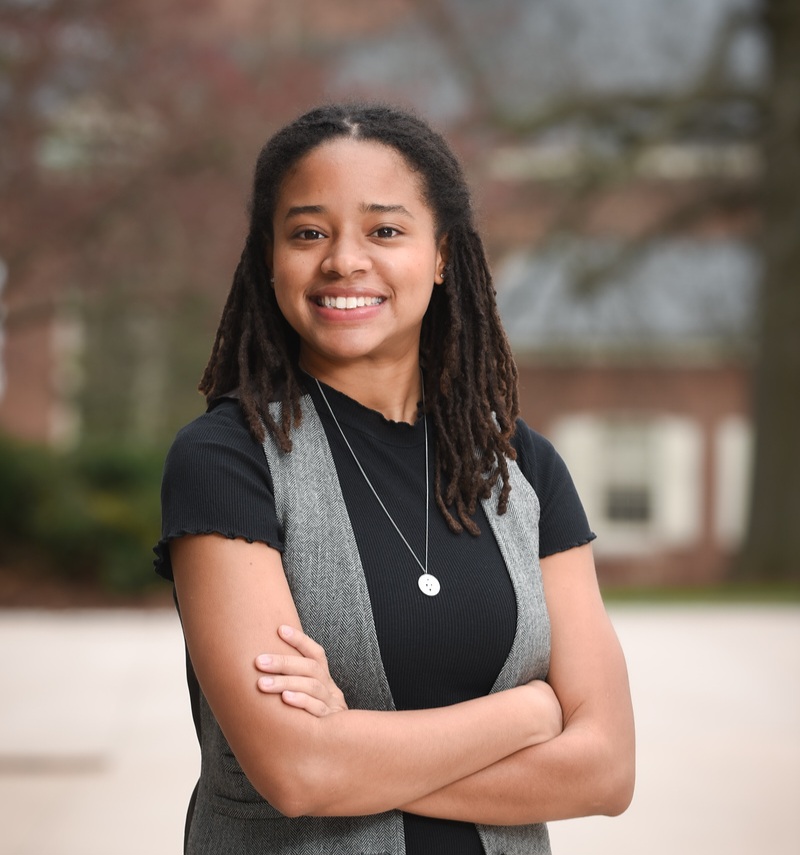
Reena Vasudevan is a writing coach at Virginia Tech University. She loves the idea of connecting seemingly unrelated things, and her passions for working with children and sports have led her to pursue a double major in Cognitive and Behavioral Neuroscience and Human Development.





Leave A Comment