
I am continually confronted by the old adage that teaching someone to do something is the best way to learn it myself. I understood the complexities of comma usage only after designing and implementing a unit on punctuation rules for ninth graders. I learned how to conduct writing conferences more effectively after training high school writing center tutors. In teaching English 101 here at George Mason University, I was able to navigate the library databases so much more easily after teaching my students how to use the databases for finding sources on their research topics. There is something about the engagement required by a teaching role that helps us deeply learn as well. While writing center consultants (or tutors, depending on your preferred nomenclature) are not teachers, the role they play in facilitating learning for other writers requires a similarly deep engagement. I am fascinated by the ways that a consultant’s own writing skills grow from the activity of helping other writers. This is not a new idea, by any means. Our own personal experiences working in writing centers tell us this, as does research on the benefits of serving as a tutor/consultant (e.g., Hughes, Gillespie, & Kail, 2010; Driscoll, 2015; Jeter, 2016). I saw this firsthand with my former high school writing center tutors, and now years later I am experiencing it personally as I work as a consultant in the George Mason University writing center.
The dissertation looms on the horizon of any doctoral student’s path; there are so many unknowns and anxieties that come along with it, and the stakes feel high. For me personally, my first hurdle in the dissertation process was choosing a topic, as I am interested in far too many different things and struggle with FOMO of the academic variety. Secondly, I had little understanding of the genre expectations for dissertations, even for my own discipline, let alone ones outside of my program.
When I applied for the role of Graduate Writing Coordinator at our university’s Writing Center in 2021, I sometimes wondered if I were actually equipped to advise other graduate students, as someone who had not yet published any scholarly articles, and was aware of just how little I understood about what a dissertation entails. I told myself that my former experience running a high school writing center and training peer tutors, plus my two years of coursework as a doctoral Writing & Rhetoric student, would help make up for my lack of direct experience with advanced graduate level writing. When I was hired, I selfishly hoped that both the training and experiences I would receive in this position would help my own dissertation feel less frightening and nebulous.
Whenever I explain to people that I offer feedback and support for graduate student writers working on their Masters thesis or doctoral dissertation, I joke about the big secret: I have written neither of those. My Masters (completed 15 years ago!) was in Secondary Education, a program that did not require that we write a thesis. As for dissertations, when I started this position in fall 2021, I had not even settled on a dissertation focus, so part of me felt like a fraud as I worked with students who were so much further along than I. Two and a half years later, that imposter feeling has dissipated greatly. I credit that partly to the “fake it ‘til you make it” phenomenon, not to mention the important conversations and training experiences facilitated by my center’s director (conveniently also the co-editor of Re/Writing the Center: Approaches to Supporting Graduate Students in the Writing Center), plus other important learning experiences at conferences such as IWCA and CGC. Still, I do have occasional insecure moments surrounding the fact that I am assisting others with a genre that I myself have not yet written. In fact, I often withhold this information from writers unless they directly ask me.
You might be thinking, “This is fine! Writing center consultants have rhetorical and pedagogical knowledge to help us navigate unfamiliar genres – right?” That’s what I used to tell my high school writing center tutors during our training class, it’s what we tell our GMU writing consultants, and it is what I try to tell myself when that inner critic voice chimes in asking me, “What do you know? You haven’t written a dissertation!”
Which is true. I haven’t written one. I have been fortunate enough, though, to be a coach on the sidelines of many writers’ projects over the past two years, which has given me at least a few answers to the question, “What do you know?” I turn to those now. Consider this a list of the things I want to remind my current self as she embarks on a year of dissertation writing (in the middle of data collection now). I have written these in the second person, since research shows that motivational self-talk, or “inner speech,” being phrased in 2nd person is more effective for regulating behavior than general statements or first-person statements (Dolcos & Albarracin, 2014)
Speaking of inner voices, I have come to realize what a central role they play in dissertation writing. The drawn-out, time-intensive process of developing a proposal, responding to committee feedback, navigating research methods for perhaps the first time, and dealing with a ticking clock of “finish by this date” are all stressors that converge in a unique way for dissertation/thesis writers. The way we “talk to ourselves” about these stressors, and our abilities, has an enormous impact on the writing experience. When working with clients, I often find myself listening to their negative descriptions of their draft or abilities and gradually help them reframe those into more positive, growth-mindset phrases (Dweck, 2007).
Working with countless writers from a wide range of disciplines, in a one-on-one setting of a writing center consultation, has been the ultimate training for that one-on-one setting of me sitting down with my own self to write. Here are some key reminders I offer my current and future self, and anyone else reading this:
- Research and scholarly writing can take a wide range of forms. Don’t be afraid to push the genre conventions slightly; there are elements of storytelling, mapping, and persuasion in any genre, including one as long and “scientific” as a dissertation (Barron & Cicciarelli, 2016). Try not to forget the wide range of audiences you might be writing for, beyond your committee.
- Resources are out there. All of the websites you referred your clients to are also available to you – and already bookmarked in your browser!
- Speaking of resources, when you get stuck on your introduction, as you tend to do, use the 4 novelty moves to guide your planning (Reineke et al, 2018). Maybe pull out that handout you created for the Introductions workshop and use it to brainstorm and plan.
- When you find yourself stuck at a crossroads where the next move is not clear and the inner voice is starting to say increasingly dramatic things like, “I can’t do this. I messed something up and clearly will never graduate” see if you can “consult” that voice like you have consulted so many writers who felt hopeless. Maybe try a phrase like, “Let’s explore some options. Not knowing the right answer is okay; you have resources and practices that can help you figure out a good next step. Remember that the writing process is often recursive.”
- Yes, it’s true that you haven’t written a dissertation before and yes it is probably the most challenging writing task of your life, but also, in many ways a dissertation is a blown-up version of previous genres you have written.
- Create a writing schedule and accountability tricks to keep your butt in the seat even when it is the last thing you want to do. For you, sitting in a room (virtual or real) with other people who are also writing is very motivating – keep that in mind. Set deadlines, and also make peace with when those must adjust (no self-flagellation).
- For all writers, but especially for you as a somewhat hyperactive endorphin addict, writing sessions go more smoothly if you have moved your body prior to sitting down. So don’t let exercise get pushed off the to do list.
- See above, but apply it to sleep.
- Don’t think of the dissertation as the culmination of your existence as a human; it’s just your first major research project, a beginning of a research trajectory, and also just a really drawn out opportunity to learn about how to conduct research and write about it.
- When writing the dissertation feels hard, remember all the articles you have read about how hard it is (for both cognitive and affective reasons). You are not alone in this. But also, you can do it, just like you’ve done other hard things. And you will grow from it.
- Motivation ebbs and flows – focus on the habits/routines you can use to keep moving forward even when the motivation is low: remember your “why,” use pomodoro timers, write with others, write in the morning, chunk your goals into smaller mini-goals, tell your family your plan for the day (more likely to stick to it). Remember the tips you offered others in the workshop you gave on writing productivity. Remember the things you have learned about yourself as a writer over these four decades of living life.
I do plan to say the above things to myself, and have already started to do so. And yet, just like we encourage our WC clients to shift to a different consultant if things aren’t flowing smoothly with the first one they try, I too need to remember this. The metaphor of serving as one’s own consultant has its limits. In short: I will benefit from utilizing the writing center as a client, and I plan to make appointments with a thesis/diss consultant on a regular basis. There is no self-consulting that can replace having a general reader who is outside of your field tell you what doesn’t make sense, what arguments need to be restructured, or which terms need to be defined. When I feel overly isolated in my writing, it suffers, as does my morale; for this reason I will prioritize semi-regular check-ins with not only writing center consultants but my very supportive dissertation chair and colleagues in my program.
When I began my time consulting thesis/diss writers, I had doubts that I would ever choose a dissertation topic, and I had only a cursory understanding of what a dissertation looked like. Now, almost three years later, I have overcome the hurdles of refining my topic, choosing my committee, designing a study, writing and defending my proposal, and–perhaps most importantly–believing that I am capable of completing this PhD journey. I am still undecided (and admittedly pretty stressed) about whether my dissertation will take the traditional five-chapter approach, a three-manuscript approach, or something entirely different, but thanks to my experiences working with writers, I feel more informed about the affordances and challenges of each of these choices.
Without the looming deadline of this blog post, I might not have paused to deeply reflect on this concept of “self-consulting” for dissertation writing, but I’m glad I did. While we often think of writing center work as service-oriented, taking this metacognitive “step back” can help writing center practitioners find an additional level of meaning beyond simply our desire to support other writers. Through supporting other writers, we can also learn strategies for supporting, or consulting, our selves on those days when ideas or motivation run low.
So, here I am setting one final intention for the coming year of dissertation writing, one that is informed by my own consulting style. At the end of an especially challenging consultation with myself–perhaps a sticky situation with data analysis, or a moment when the structure of a chapter feels all over the place–I will seek out that kind, patient inner consultant who smiles and says, “Thank you for sharing your writing with me. You are making good progress! It was nice working with you today.” May you, reader, find someone like that too.
References
Barron, P. and Cicciarelli, L. (2016). Tutors’ Column: “Stories and Maps: Narrative Tutoring Strategies for Working with Dissertation Writers.” WLN: A Journal of Writing Center Scholarship, 40 (5-6). Jan/Feb 2016. p. 26-29. https://wac.colostate.edu/docs/wln/v40n5/barron-cicciarelli.pdf
Dolcos, S., & Albarracin, D. (2014). The inner speech of behavioral regulation: Intentions and task performance strengthen when you talk to yourself as a You. European Journal of Social Psychology, 44(6), 636–642. https://doi.org/10.1002/ejsp.2048
Driscoll, D. L. (2015). Building Connections and Transferring Knowledge: The Benefits of a Peer Tutoring Course Beyond the Writing Center. The Writing Center Journal, 35(1), 153–181. https://www.jstor.org/stable/43673622
Dweck, C. S. (2007). Mindset: The New Psychology of Success (Reprint edition). Ballantine Books.
Hughes, B., Gillespie, P., & Kail, H. (2010). What They Take with Them: Findings from the Peer Writing Tutor Alumni Research Project. The Writing Center Journal, 30(2), 12–46. https://www.jstor.org/stable/43442343
Jeter, A. L. (2016). High school peer tutor alumni research project [Ph.D., Indiana University of Pennsylvania]. https://www.proquest.com/docview/1846539465/abstract/5A27CE33E1AE466EPQ/1
Lawrence, S., & Zawacki, T. M. (2018). Re/Writing the Center: Approaches to Supporting Graduate Students in the Writing Center. University Press of Colorado. http://www.jstor.org/stable/j.ctvbqs9jx
Reinecke, J., Glavan, M., Phillips, D., Wolfe, J. (2018). “Novelty Moves”: Training Tutors to Engage with Technical Content. In Lawrence, S. & Zawacki, T. (Eds.) Re/Writing the Center: Approaches to Supporting Graduate Students in the Writing Center. University Press of Colorado. p. 163-181. http://www.jstor.org/stable/j.ctvbqs9jx.13

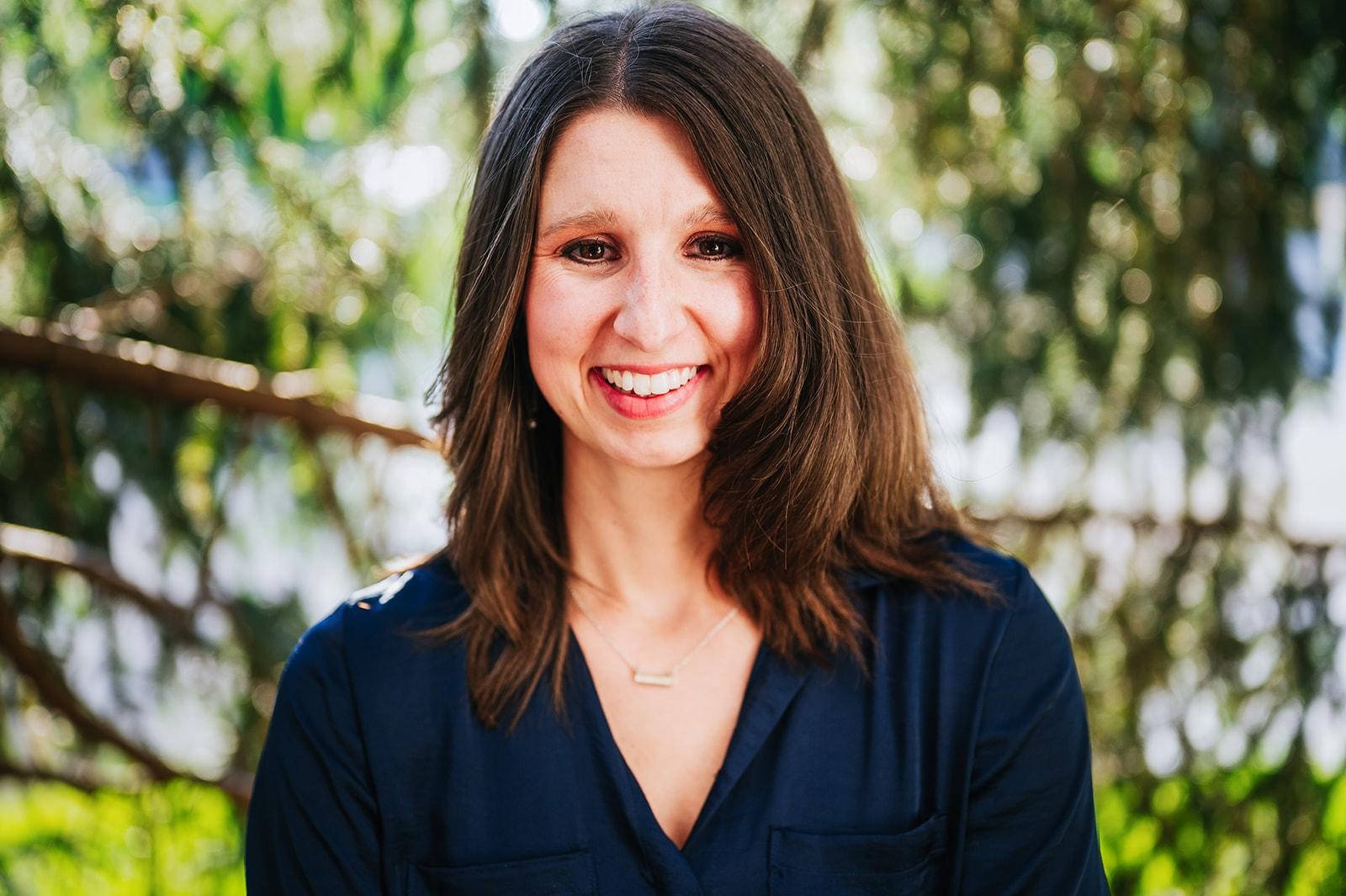
About the Author Currently a PhD candidate in George Mason University’s Writing and Rhetoric program, Jenny Goransson has worked as the Graduate Writing Coordinator and a thesis/dissertation consultant since fall 2021, after teaching composition for two years. Her recent research focuses on writing centers expanding into learning centers or merging with learning centers, and her dissertation focuses on mindfulness practices to support teachers as they offer written feedback on student writing. Before coming to Mason, Jenny worked for eleven years as a high school English teacher at West Springfield High School in Springfield, VA. At WSHS she founded and directed the writing center for nine years, and has played an active role in the secondary school writing center community. She serves on the editorial board of the Journal of Peer Tutoring in Secondary Schools and is the incoming president of the Secondary School Writing Center Association. Jenny is also a mother, runner, musical theatre nerd, and lover of podcasts and Billy Collins poetry.




Well done and well said! Good luck in reaching this next milestone using your own advice and that of those around you.
I enjoyed reading this–the idea of self-consulting is original and smart, especially with the prompts provided.